To understand how our data merge works, let's look at two real pages. Take 8001 Zurich: it's a clean city case. swisstopo confirms the postcode maps entirely to Zürich, the Federal Tax Administration (ESTV) provides the tax scenarios, and the Federal Statistical Office (BFS) supplies population and household data.
Now look at 1008 Prilly. It pulls from the exact same source families, but the postcode is split straight down the middle between two municipalities. Because of this 50/50 split, the tax and demographic blocks have to be estimate-based. This isn't a stylistic choice; it's a direct result of the data merge.
We don't invent a synthetic "single truth" and flatten everything to make it look perfect. We line up official sources that answer different questions and leave the messy edges visible so you know exactly what you're looking at.

swisstopo gives us the postal and municipal geometry. ESTV covers tax scenarios and municipal multipliers. BFS supplies the demographics. Mobility data handles the transport layer. Every source has a specific job, and we make sure you can see which one is doing what.
Why the merge logic matters
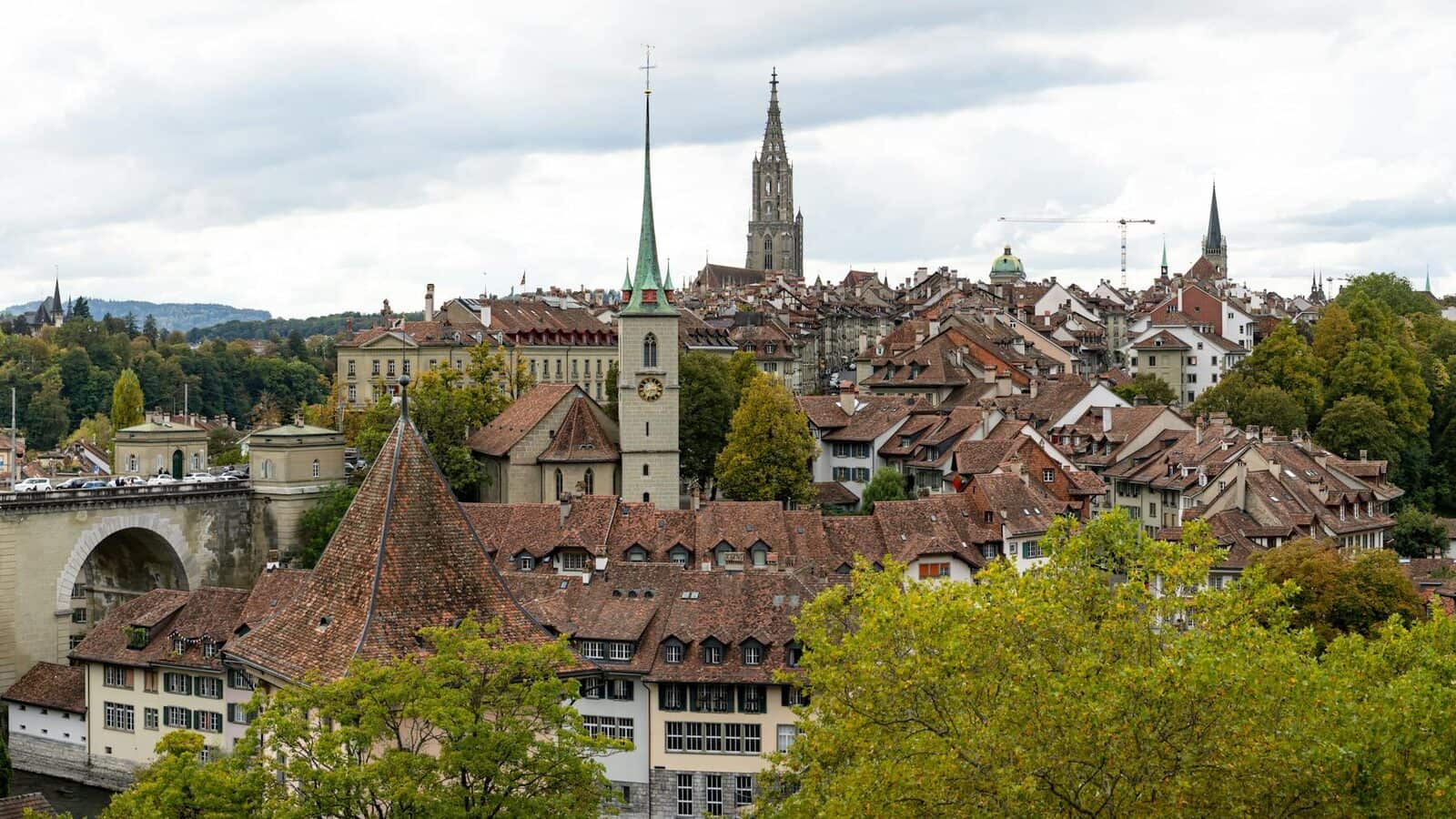
The reality is that postcodes, localities, and municipalities do not line up neatly. One municipality can cover several postcodes, like in Bern. Alternatively, one postcode can bleed into several municipalities, as seen in Prilly or Echallens. If we just copied a single register line and pretended it was the whole truth, we would be hiding the exact ambiguity you need to understand the area.
That is why a page might give you a direct number in one section and an estimate in another. We aren't being inconsistent; we are showing you exactly where the underlying units match perfectly and where they don't.

When the official source takes over
PLZHub is at its best when you want to build a shortlist, compare options, or quickly understand why one postcode is straightforward and another is complicated.
But it is not the final step for a formal decision. When you need to sign a lease, file your taxes, or register a business, you must check the original calculator, the official register, or contact the municipality directly. We get you 90% of the way there; the binding source handles the rest.