What the page is actually for
A postcode page works best when your question is structural. Are you looking at a place attached to one single municipality, or is it split across several? Is it urban, suburban, or only partially estimated in the data? The page gets weak when your question becomes address-specific, legal, or transactional.
That difference is easy to spot. 8001 Zurich is a clean one-municipality page with a single, obvious frame. 1000 Lausanne 25 is still a single-municipality page, but it carries several locality labels, which means you need to read it more carefully. 1008 Prilly is the real edge case. The postcode is split 50/50 between Prilly and Jouxtens-Mézery. Here, the postcode label alone isn't enough if your choice depends on the exact municipal border.
The signals to read first
To understand what you're looking at, check municipalities, tax.isEstimate, and demographics.isEstimate first. They tell you upfront whether the page is clean, mixed, or partially estimated—long before you start interpreting the headline numbers.
If municipalities has one entry at 100%, like in 8001 Zurich, the data is usually straightforward. If you see an explicit municipality split, like in 1008 Prilly, you know the page summarizes more than one administrative reality. And if a page uses estimate flags, treat it as good for orientation, not final proof.
Where the limit shows up
The limit becomes obvious as soon as one postcode covers more than one administrative answer. Taxes, demographics, and address logic remain useful, but only as a frame of reference. Take 6300 Zug: it is overwhelmingly in Zug but still includes a small Baar share. That is perfectly fine for putting together a shortlist. It is not enough if the exact municipality changes your tax rate or school district.
This is why 1008 Prilly acts more as a warning sign than a conclusion. It tells you immediately that the postcode is mixed. It won't tell you, by itself, which half matters for a lease, tax filing, or address verification.
The right reading order
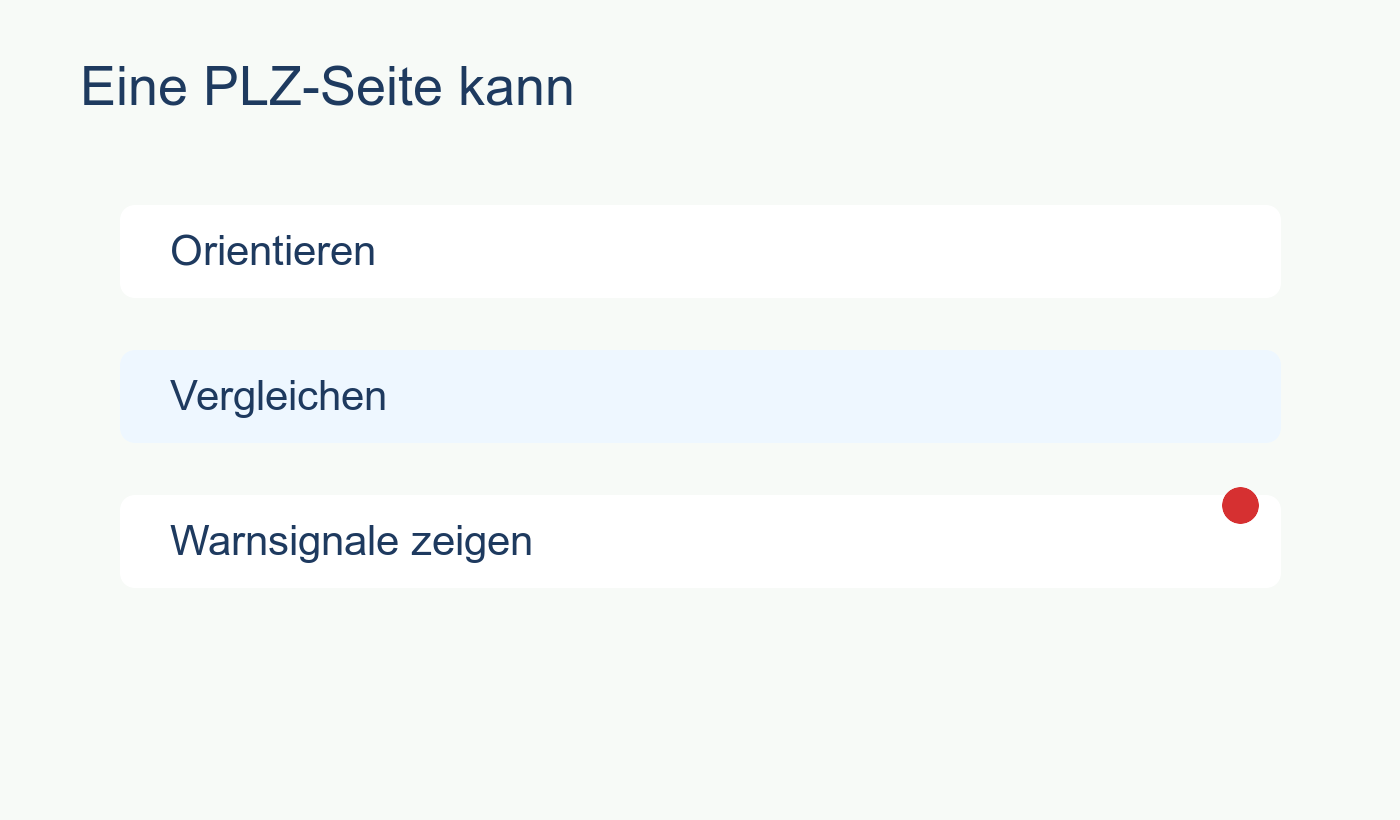
Start with a clean page like 8001 Zurich, compare it with a layered case like 1000 Lausanne 25, and then look at the edge case in 1008 Prilly. That sequence answers the main question directly:
- A postcode page quickly tells you the structure of a place.
- It tells you when tax or demographics data is clean enough for a real comparison.
- It cannot replace the official source once your decision depends on an exact address or municipality.
How to use PLZHub data and our methodology are good follow-ups, but the practical point remains simple. Use the postcode page to sort your options, not to settle final administrative facts.