Where the split really shows up
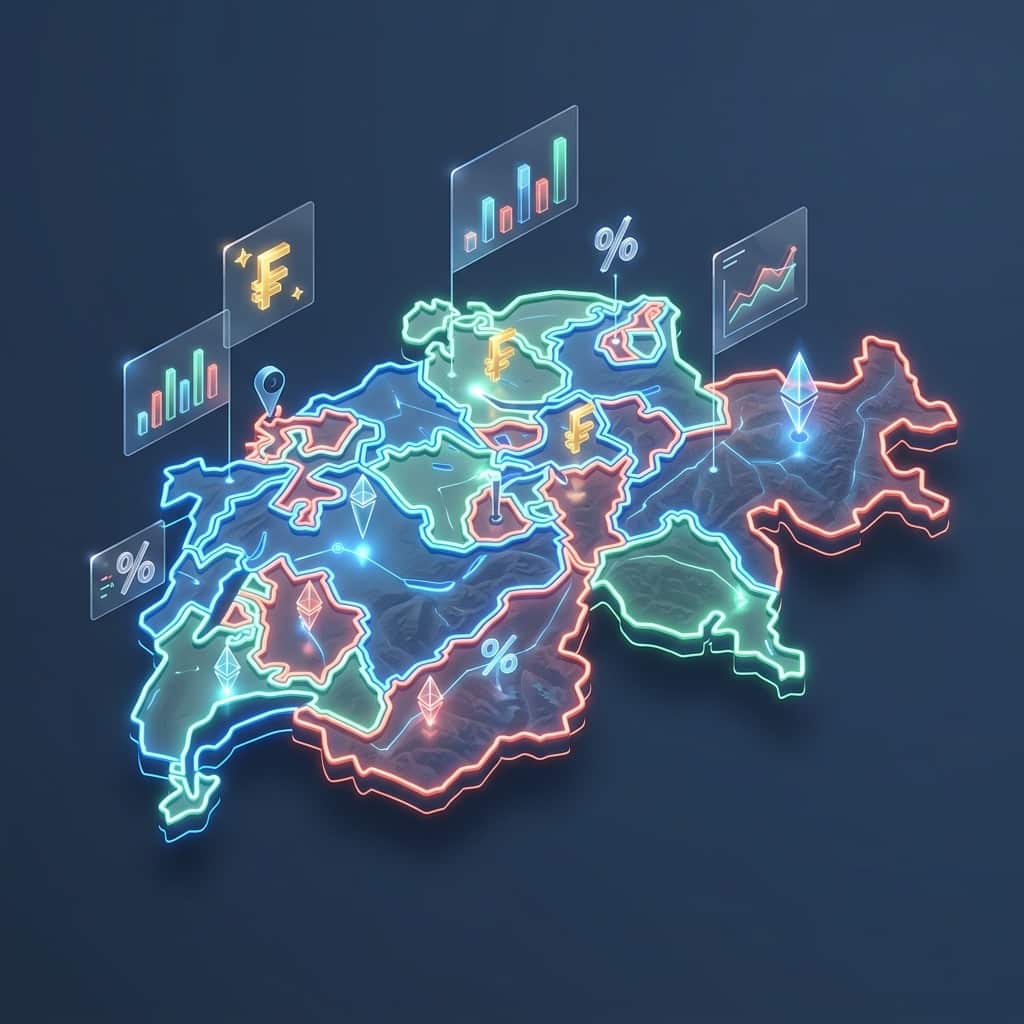
If you look closely at the data, the overlap between postcodes and administrative boundaries gets messy exactly where you'd expect it to. It mostly happens where a postal routing area has to cover a mixed settlement pattern: urban edges, long valley stretches, or small hamlets that sit across borders.
Take 1008 Prilly as a classic example. It's a clean 50/50 split between Prilly and Jouxtens-Mézery. Then you have places like 1040 Echallens, which is essentially a three-way tie at roughly one third each. 6110 Wolhusen represents the typical valley scenario: a dominant municipality at 75.4%, trailing off into a long tail across Werthenstein, Ruswil, Menznau, and others. Finally, 1148 Chavannes-le-Veyron is almost clean at 97.5%, but leaves just enough tiny residual shares to technically count as a split.

This isn't a data glitch. Postal routing follows delivery routes, not political lines drawn centuries ago. That's why you don't just see this in dense cities, but out in the country where towns have slowly grown into each other.
Why you should care
For most people, this distinction only hits home when the tax bill arrives. Tax rates are tied to the exact municipality of your address, not the name on the postcode. When pulling statistics or planning a move, the place name gives you a general area, but it rarely tells the whole story. You really need to read the postcode and the actual municipal shares side-by-side to know exactly where you stand.